
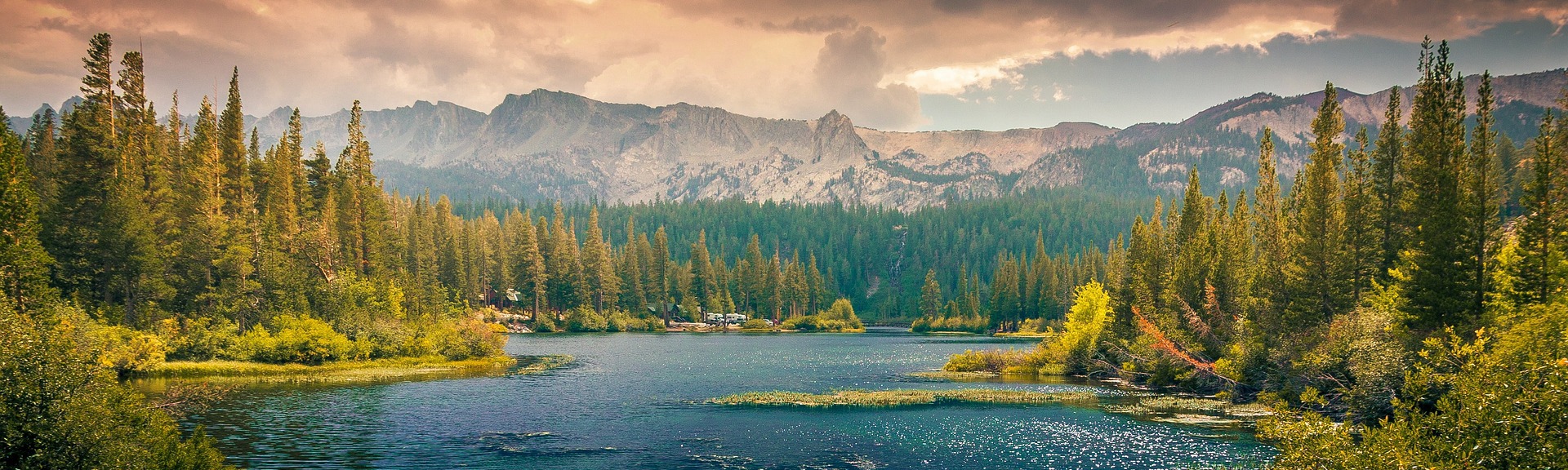
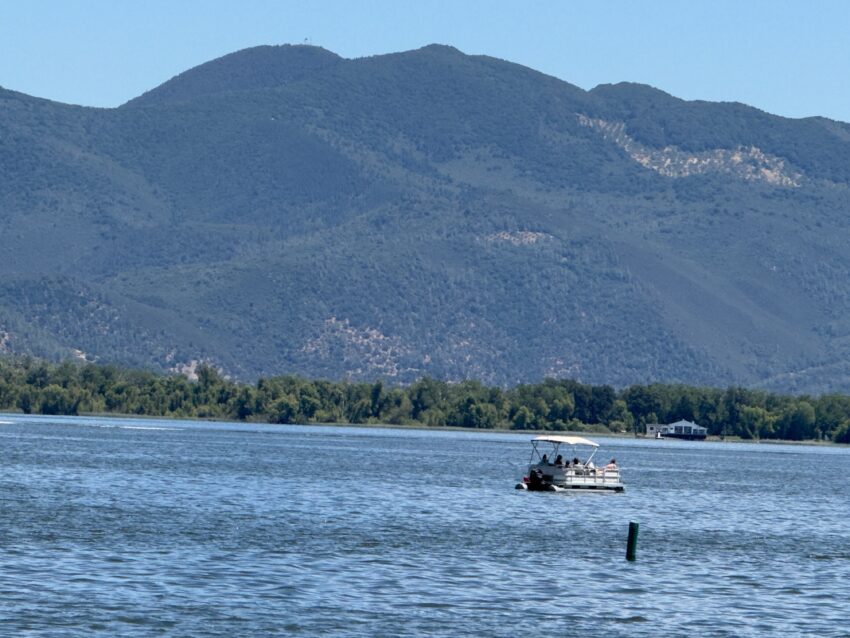
The Clear Lake co-management agreement took effect Sept. 11, when leaders of all 23 governments in it signed at Big Valley Rancheria, on the shore of the lake. Lake County’s signature came out of a split vote.
The county’s Sept. 11 announcement said supervisors approved the final version “four to one.” The board’s minutes for that Sept. 1 meeting count it differently. Three votes in favor, from Supervisors Bruno Sabatier, Jessica Pyska and Board Chair Brad Rasmussen. One no, from Supervisor Helen Owen. Supervisor Eddie Crandell was absent.
The minutes show the same split when the board sat as the Lake County Watershed Protection District’s directors.
Terre Logsdon, the chief climate resiliency officer, presented the item to supervisors Sept. 1. One member of the public, Kate Schmidt-Hopper, spoke by Zoom.
It’s the second time Owen has declined to back the agreement. When supervisors first approved it July 7, the vote was three in favor, with Owen abstaining and Crandell absent. The July minutes say Owen gave a reason for her abstention. They don’t say what it was.
In effect since Sept. 11
The agreement says it “shall take effect upon the date of the final signature.” Every one of the 23 signature blocks in the executed copy Lake County posted on its website is signed and dated Sept. 11, 2026.
It runs five years and renews on its own. Any party can walk away on 60 days’ written notice.
The full title is the Clear Lake Watershed and Chi (Ṣátti) Memorandum of Understanding Co-Management Agreement. The county’s announcement calls it “not a legally binding agreement.”
The Chi is the Clear Lake hitch. It’s a fish that exists only in the Clear Lake watershed. Chi is its name in Pomo dialects; Ṣátti is its name in Lake Miwok.
7 tribes, 16 state and local governments
The Sept. 1 vote was on an amended version. It added Koi Nation of Northern California, the seventh tribe, and a new signature page.
In the version attached to the Clearlake City Council‘s Aug. 6 agenda packet, Koi Nation’s entry still had placeholder text in it. It designated “their POSITION” as the tribe’s representative. The signed copy fills that in. It names the tribe’s constitution and designates its chief of staff.
Koi Nation Chairperson Darin Beltran signed alongside the chairs of the Habematolel Pomo of Upper Lake, Robinson Rancheria, the Big Valley Band of Pomo Indians, Middletown Rancheria, the Scotts Valley Band of Pomo Indians and the Elem Indian Colony.
For the state, Natural Resources Secretary Wade Crowfoot and Yana Garcia, secretary of the California Environmental Protection Agency, signed, along with officials from 10 departments, boards and commissions.
Lakeport Mayor Brandon Disney signed for his city. City Manager Alan Flora signed for Clearlake.
Rasmussen signed twice. He chairs the Board of Supervisors, and he chairs the watershed district’s board, so he put his name down once for each.
What the agreement does
The partners commit to annual work plans, leadership summits, coordinated restoration projects and shared decision-making, according to a release from the California Natural Resources Agency. The agency said it’s the state’s first watershed co-management agreement since AB 1284 passed in 2024. That law encourages the agency to enter co-management agreements with federally recognized tribes, according to the county. It doesn’t apply to local governments, which signed on anyway, the county said.
Lake County’s emergency proclamation over the hitch, approved Jan. 24, 2023, is still in effect, the county said.
Two lake projects broke ground the same day. UC Davis started its hypolimnetic oxygenation system in the Oaks Arm. It adds oxygen to the lake’s deep water, going after the conditions that keep producing harmful algal blooms. BlueCycle Technologies and the city of Clearlake started an algae-harvesting demonstration project.
“This agreement recognizes tribal governments as equal partners in shaping the future of the watershed,” Big Valley Chairperson Flaman McCloud Jr. said in the county’s announcement.
“Our tribal community has never stopped caring for these lands and waters, even through generations of hardship,” Habematolel Chairperson Danielle Cirelli said in the state’s release.
Gov. Gavin Newsom, in the same release: “There are different histories, different meanings, but it’s the same water.”
The first five-year term runs to September 2031.