


In August, Napa County Supervisor Joelle Gallagher asked county staff for a fast, temporary ban on new or expanded jails and detention centers on land outside the county’s cities.
“We want to do this quickly,” Gallagher told the Board of Supervisors on Aug. 25.
On Tuesday, supervisors will vote on a resolution instead. A resolution is a formal statement of the board’s position. It says that using more county land for detention “is not a beneficial public use of land or resources.” It bans nothing. It doesn’t change the county’s zoning code.
Gallagher had asked for an urgency ordinance, a law that takes effect right away, to put a temporary moratorium on “the siting, construction, conversion, or operation of new or expanded detention or correctional facilities” in the unincorporated area, the land outside the cities.
Staff met and reached two conclusions, the staff report for Tuesday’s meeting says. The first is that “the defensibility of such an urgency ordinance is presently at a lower level than would be preferable.” The report doesn’t say why.
The second: Napa County’s code lists what’s allowed, and staff wrote that naming a banned use “would create undesirable precedent.”
So staff wrote a resolution built on policies the board already has.
What the resolution says
The five-page draft talks about water, farmland, housing, airports and fire. It says the state ranks the Napa Valley groundwater subbasin as high priority. It says about 86,100 acres on 965 parcels are under Williamson Act contracts, which lower property taxes for owners who keep land in farming or open space. It says 57% of Napa County has burned since 2014.
It also says the county already runs a detention facility at 2210 Napa Vallejo Highway, and that it is enough for the county’s needs.
The last finding cites one section of county code. That section defines a “quasi-public use” as one that serves the public and is run by a private entity under government authorization or by a civic group. Staff wrote that a detention facility “could arguably” fit that definition. The report says the resolution would “lay effective and defensible groundwork” on that question.
Other counties passed temporary bans
Gallagher made the August request for the board’s ad hoc inclusion committee, which is Gallagher and Supervisor Belia Ramos. She said the committee had been meeting with other Bay Area governments.
Other Bay Area governments have passed temporary bans. U.S. Rep. Sam Liccardo released a model ordinance toolkit for cities and counties. Its stated goal is to protect community health and safety “from the potential impacts of ICE processing and detention centers through sensible local zoning changes.” ICE is U.S. Immigration and Customs Enforcement.
The toolkit says San Mateo County adopted a temporary ordinance on Aug. 25, the same day Gallagher made her request. It also warns that “direct bans on immigration detention are not enforceable,” and says health, safety and environmental rules remain options.
Marin County supervisors approved a 45-day moratorium on Nov. 10, according to a county news release. The release says, “Federal plans for detention facilities near Gilroy and in Dublin have highlighted a gap in Marin County’s planning regulations.” It says the moratorium wouldn’t stop federal immigration enforcement.
Napa County’s draft resolution doesn’t mention immigration. It doesn’t name any detention center proposed for Napa County. Neither does the staff report.
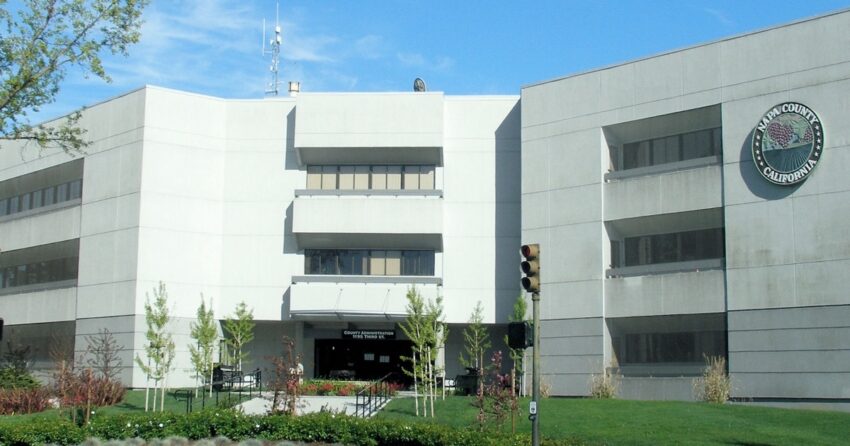
The Napa County board meets at 9 a.m. Tuesday on the third floor of 1195 Third St. in Napa. The resolution is item 8D. People can comment by phone at 707-299-1776 when the item comes up, or email publiccomment@napacounty.gov. The county asks for emails 24 hours ahead so every supervisor sees them.
Get the Gazette by email
The day’s stories from Sonoma, Napa, Lake and Mendocino counties, picked by the editor. Free.