

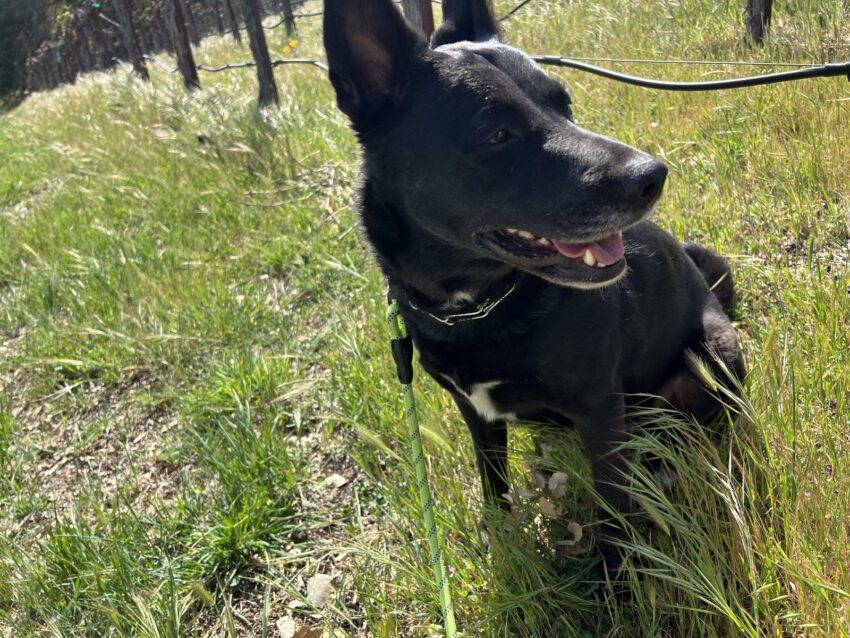
California has counted more rabid bats in 10 months of this year than in all of last year.
The California Department of Public Health keeps a running table of animals that test positive for rabies. It lists 364 bats from Jan. 1 through Oct. 30. The table for all of 2025 lists 314 bats, the one for 2024 lists 229 and the one for 2023 lists 179.
Seven of this year’s rabid bats were in Sonoma County and one was in Lake County. The table shows none for Mendocino County.
California’s Health and Safety Code requires a rabies shot for a dog once it’s 3 months old, unless a veterinarian finds the shot would endanger the dog’s life.
Both the 2025 and 2026 tables are marked provisional, which means the counts can still change. The tables also count only animals that tested positive and don’t say how many animals were tested.
What the count means for a dog
Rabies is a disease caused by a virus that infects the brain, and the state health department says people and animals with it almost always die once symptoms begin. Rabies spreads through the bite of an infected animal, or when an infected animal’s saliva gets into a cut or into the eyes, nose or mouth.
Bats are most of California’s rabid animals. This year’s state table lists 389 rabid animals in all. Besides the 364 bats, it lists 21 skunks, two raccoons, one cat and one dog. The dog was in Calaveras County.
The state’s list of signs that an animal may have rabies includes “a bat that can’t fly or has been caught by a dog or cat.”
The law on rabies shots
The same law that requires the shot at 3 months requires a license once the dog is 4 months old. The state health department’s rabies page gives a different age for the shot. It says dogs over 4 months must be vaccinated.
The state health department’s vaccination sheet says the first shot is followed by a second one 12 months later, and after that a dog gets a booster every three years.
A shot given after a dog meets a rabid animal may not work. The state’s rabies fact sheet says, “Vaccinating pets against rabies after they are exposed is not reliably effective at preventing illness and death.”
There’s no statewide rule for cats. Sonoma County has its own. Sonoma County Animal Services says a county ordinance requires a rabies shot every year for cats 4 months and older. Lake County’s rabies page says cats there aren’t required by law to get the shot every year.
State law also requires every city and county to hold dog vaccination clinics, or arrange for them, and to charge no more than the actual cost of the shot. None of the three counties’ animal services websites listed an upcoming clinic date as of Friday. Mendocino County’s Animal Care Services Clinic gives rabies shots by appointment at 707-463-4782.
Sonoma County’s numbers
Sonoma County’s health department published a rabies advisory for doctors and other healthcare providers on Sept. 10. It says the county had sent 129 animals for testing so far this year and six tested positive, all of them bats.
The advisory says that’s in line with what the county expects, which is three to seven positive animals a year. Over the past 10 years, 48 animals in the county tested positive, and 94% of them were bats.
The state table, which runs seven weeks later than the advisory, puts Sonoma County at seven bats. The county had five in 2025 and four in 2024.
Lake County had one rabid bat in 2025 and none in 2023 or 2024. Mendocino County has had no rabid bats in the four years of tables. A fox there tested positive in 2024.
If a dog or a person touches a bat
The state’s advice is to leave the bat alone and call animal control. “Do not grab or try to capture the animal yourself,” its rabies page says.
People need care too. The state says bats “have very small teeth and may not leave a mark when they bite.” It says to talk to a doctor if a bat is found in a room with a child or with someone who was asleep, even if no bite shows. Treatment given soon after a bite prevents the disease, the state says.
In Sonoma County, call Animal Services at 707-565-7100 about a pet or a wild animal and the Disease Control Unit at 707-565-4567 about a person. In Lake County, call Animal Control at 707-263-0278 or the county’s communicable disease staff at 707-263-1090.
If a wild animal bites a pet, the state says to report it to animal control, which can try to catch the animal for testing. If the animal can’t be tested, animal control decides what to do with the pet “based on its vaccination history.”
Get the Gazette by email
The day’s stories from Sonoma, Napa, Lake and Mendocino counties, picked by the editor. Free.