

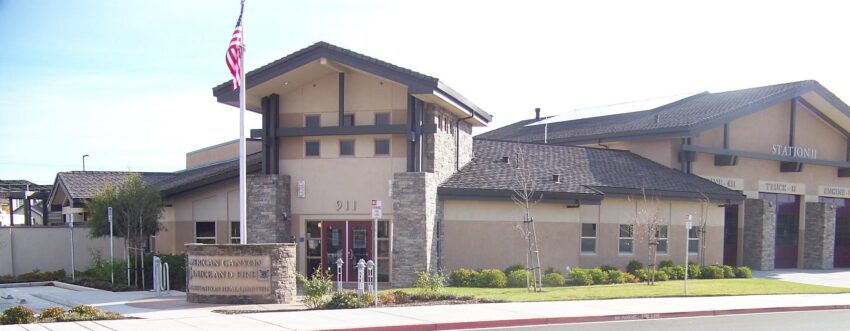

A third of the American Canyon Fire Protection District’s staff is off on some form of leave, Acting Fire Chief Cliff Campbell told the district’s board Nov. 10. Someone has to cover those shifts, and the district is paying overtime to do it.
“It’s unprecedented, the amount of overtime we’re spending,” Campbell said. The highest in the history he could see, he said, was $720,000.
The board set aside $900,000 for overtime when it adopted this year’s budget in September. At the pace of the first eight payrolls of the fiscal year, July 1 through Oct. 15, overtime would reach $1,513,081 by June 30, according to the Nov. 10 staff report. That’s $613,081 over.
The budget was already $1,340,602 short. The district is covering that gap from savings. The overtime alone would push the shortfall to $1,953,683, the report says, before the added payroll taxes and workers’ compensation costs that come with overtime.
Campbell called the projection a worst case. Some of the people on leave may come back, he said, and he has heard at least two might return in December. But he said a couple are expected to be out until near the end of the fiscal year or later.
What the board decided
The five board members are the American Canyon City Council, sitting as the fire board. On Nov. 10, they took no budget action. They voted 5-0 to send staff back to work on options, on a motion from Director David Oro.
Oro asked for scenarios for cutting the deficit by different amounts, such as what a 20% or 30% cut would look like. Vice Chair Mark Joseph said the district should freeze a battalion chief’s job that is coming open when its holder retires. Freezing a vacant firefighter job, he said, would only “trigger more overtime” unless the district and its firefighters’ union agree on changes to minimum staffing.
“We have to stop the bleeding and we have to do it quick,” Director Melissa Lamattina said.
Joseph called the report “remarkably depressing.” “But I appreciate it because it’s better to have the numbers than to have a rosy projection,” he said.
Campbell said the district will have to freeze positions “to put any kind of a dent into this.” Those changes would need talks with the union, he said. The union is running its own audit of the district’s books, and Campbell said he expects its numbers by January.
The board’s next scheduled meeting is Jan. 26. Joseph suggested a special meeting in December, but Oro said one isn’t needed until the union’s audit is done.
Why the money ran short
Property taxes are 81% of the district’s operating revenue, about $6.8 million this year. The district’s old forecast counted on those taxes growing 7% a year, consultant Brian Moura of Regional Government Services told the board. They have come in at 3% to 4%.
In September, Campbell said development has also slowed, including at Watson Ranch, and legal issues affected the Giovannoni project. Salaries and benefits make up 89.3% of this year’s spending and 93% of its growth since 2024-25, the staff report says.
Cash runs thin until December
The district’s first big property tax payment from the county comes in mid- to late December, and in late October the city’s finance department warned the district it might run short of cash in December. City and district staff now believe the district will have enough cash to last until the tax payment, the report says.
From October to mid-December, “you’re kind of on fumes, so to speak,” Tracy Fuller said. Fuller is the district’s other consultant from Regional Government Services.
The district’s operating fund started the year with an estimated $5,013,852 in savings. This year’s budgeted shortfall would leave $3,673,250, the report says. Fuller told the board that an earlier look at the budget pointed to less than $700,000 in the bank by June 2028.
What it could mean for homeowners
Cuts carry their own risk.
The district holds a Class 2/2Y rating from the Insurance Services Office, a score insurers use to help set property insurance rates. A Class 1 or Class 2 rating usually means lower premiums, the staff report says. Staffing is one of the biggest factors in that score, Campbell said.
If the rating slips, Fuller told the board, “individual homeowners insurance rates have the potential to go up. So that should be of concern to every property owner in American Canyon that is within the district service area.”
For a typical house, homeowners already pay a fire suppression assessment of $122.72 a year. It’s budgeted to bring in $945,508 this year. Raising it takes a vote of the people, and the next general election is November 2028. Fuller said a special measure could also be put before voters.
Joseph pointed to two tax measures from this month’s election. One is Measure B, the countywide wildfire tax. The other is the city’s Measure P sales tax. The fire district and the city are separate agencies, he said, but talks about Measure P money “might be appropriate.”
Get the Gazette by email
The day’s stories from Sonoma, Napa, Lake and Mendocino counties, picked by the editor. Free.