
The vineyard manager at a winery near Geyserville told a consultant that the winery’s well “has gone dry at higher pumping rates.”
Now the owner wants Sonoma County’s permission to make almost three times as much wine there. The county’s paperwork gives two different answers on how much water that would take.
Foley Family Wines Inc. owns Prevail Mountain Winery at 2450 Highway 128 and has asked to raise the winery’s yearly limit from 250,000 cases to 700,000 cases. The Sonoma County Planning Commission meets at 1 p.m. Thursday, Dec. 3, in the hearing room at Permit Sonoma, the county’s planning and permit department, 2550 Ventura Ave. in Santa Rosa. The winery’s request is the first item, listed for 1:05 p.m. County planners recommend approval.
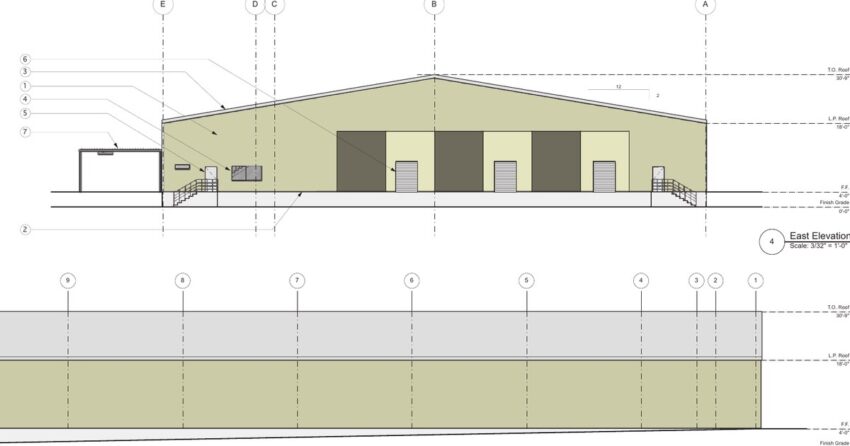
The plan also calls for a new 38,250-square-foot building and 40 full-time workers, up from 25, plus 15 more at harvest. No tasting room, events or visitors are proposed.
2 water numbers
The county staff report says the larger winery is expected to use “27,000 gallons per day (during peak demand) or 84 acre-feet per year.”
An acre-foot is about 326,000 gallons, so at 27,000 gallons every day, a year comes to about 30 acre-feet. To reach 84 acre-feet, the winery would have to average about 75,000 gallons a day.
Both numbers come from a January 2023 groundwater report that Geosyntec Consultants prepared for Foley Family Wines. In that report, 27,000 gallons a day is the peak demand and the yearly total is 27,375,000 gallons, or 84 acre-feet.
The staff report says the county’s geologist reviewed the estimate and expects the winery to use less water than that.
A separate study in the same packet looks at what goes down the drain. Summit Engineering is the firm that applied for the permit on the winery’s behalf. It says that at full production the winery would send out 9.9 million gallons of wastewater from winemaking in a year. That’s 27,100 gallons on an average day and 54,100 gallons on an average day at the peak of harvest.
A well that ‘has gone dry’
The winery’s water comes from one well on the property, which the reports call Well 5, and in a test on Nov. 10, 2022, it pumped 33 gallons a minute for about eight hours. Pumped around the clock at that rate, it would bring up about 47,500 gallons a day.
The Geosyntec report says of the same well: “The current site vineyard manager reported that the well has gone dry at higher pumping rates.”
In the county staff report, that statement doesn’t come up. Neither does the environmental review that planners wrote for the commission. Both say the test results “indicate sufficient yield to support the project.”
The winery’s project description says more water storage tanks will be added.
The county says the water level in the well has held steady since it was drilled, which it says shows the water being pumped out is replaced by water soaking back into the ground.
From 5 acre-feet to 84
Planners aren’t asking for a new environmental study. They say the expansion can be covered by an update to a study the county approved in 2016, when it last raised the winery’s limit.
In that 2016 study, which is attached to the packet, is this line: “The winery will use less than 5 acre-feet a year.”
The update uses the 84 acre-feet figure and finds no large increase in the effects on groundwater, and its water section doesn’t mention the earlier figure.
One figure in the consultant’s report doesn’t match the numbers beside it. The report estimates how much rain soaks into the ground by starting with the rain that falls on the site and subtracting the water that evaporates or is used by plants. It lists that loss as 83 acre-feet a year. The report’s own figures, 16.7 inches over about 580 acres, work out to about 807 acre-feet.
With the corrected figure, the report’s method gives about 1,220 acre-feet a year soaking in, not the 1,941 it reports. That’s still more than 84. The consultant counted about 580 acres, while the county puts the property at 507.5 acres.
Grapes from Mendocino and Lake
The winery sits about 10 miles from both the Mendocino and Lake county lines, the staff report says. One proposed permit condition would let it bring in grapes from neighboring counties within 60 miles, as long as at least 75% come from Sonoma County.
The land is under a Williamson Act contract, a state program meant to keep land in farming and open space. Planners write that they have historically read the county’s rules for that land to require 100% Sonoma County grapes. They point to a February 2025 decision that let a winery in Sonoma, near the Napa County line, use 75%.
The staff report says rulings on how to read those rules come from the Permit Sonoma director or the Board of Supervisors. The packet doesn’t include one for this site.
A traffic study summarized in the staff report counts about 128 new trips a day, 90 by workers and 38 by trucks.
The staff report says no public comments have been submitted. Comments can be emailed to PlanningAgency@sonomacounty.gov with the sender’s name and the project number, UPE23-0001. The county advises sending them no later than the day before the hearing.
Get the Gazette by email
The day’s stories from Sonoma, Napa, Lake and Mendocino counties, picked by the editor. Free.