

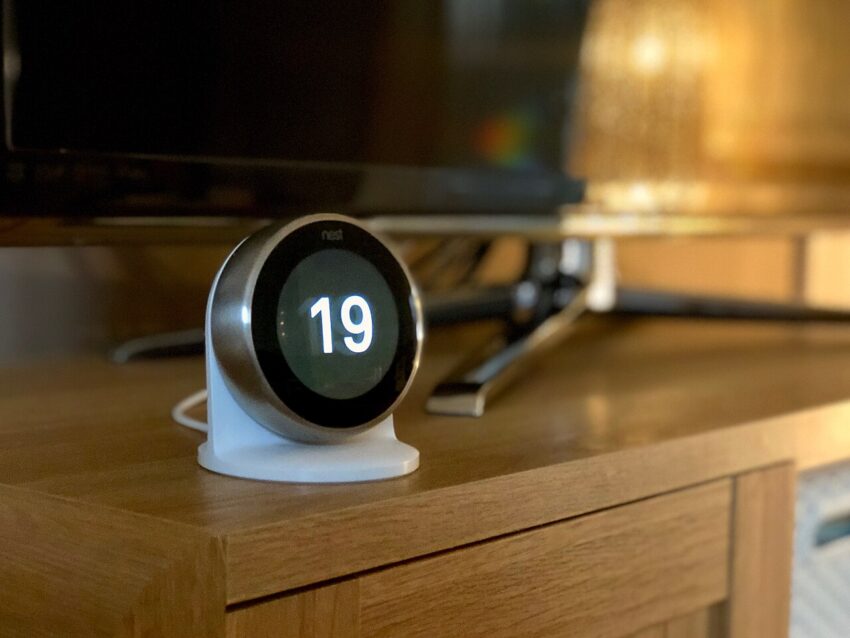
Sonoma Clean Power wants to put a free smart thermostat on the wall of up to 1,000 lower-income homes in Sonoma and Mendocino counties — professionally installed, no charge — and then pay those households $5 a month to let the device ease off the air conditioning for a few minutes on the hottest afternoons.
The offer, announced last week, is the opening move in a four-year, $6 million project called VPP-FLEX, funded by a $4.99 million grant from the California Energy Commission and $1 million of SCP’s own money. The goal: stitch thousands of thermostats, electric vehicle chargers, batteries and water heaters across the two counties into a single coordinated resource — what the industry calls a virtual power plant.
Key takeaways
- Customers enrolled in the CARE or FERA discount programs can get a smart thermostat and professional installation free, with automatic enrollment in SCP Rewards and a $5 monthly bill credit.
- Customers who already own a compatible thermostat — Google Nest, Ecobee or Sensi — can collect $200 for enrolling it, plus the same $5 monthly credit.
- The CEC grant runs through March 2029 and also funds smart panels and batteries at 40 multifamily properties, incentives for 7,500 new devices and enrollment of up to 500 small businesses.
- Four local groups — Latino Service Providers, Council on Aging Services for Seniors, North Coast Opportunities and Nuestra Comunidad — share $250,000 to run multilingual outreach and help people sign up.
- Participation is voluntary, and customers can override their thermostat at any time.
How the offer works
The free thermostats go to income-qualified customers first — people already enrolled in CARE or FERA, the state programs that discount electric bills for lower-income households. SCP has about 37,000 customers who meet the income bar, though not all of them have central air conditioning, Felicia Smith, the agency’s director of customer energy solutions, told Utility Dive. She put the value of the hardware and installation at about $400 per home.
Qualifying households get automatic enrollment in SCP Rewards, the agency’s demand-response program, formerly known as GridSavvy Rewards. On peak afternoons between May and October, enrolled thermostats make small, temporary adjustments to trim electricity use. Customers keep full control and can override the changes whenever they want.
“By removing cost barriers for both the thermostat and installation, we’re making it easier for families to participate in programs that can help to lower bills and improve comfort at home,” SCP CEO Geof Syphers said in the announcement.
SCP says it will open the program to a wider audience later this spring. Details are at sonomacleanpower.org/gridsavvy-rewards.
The bigger play: a virtual power plant
A virtual power plant is exactly what it sounds like, minus the smokestack. Instead of firing up a generator when demand spikes, the grid operator nudges thousands of small devices — thermostats, EV chargers, home batteries, water heaters — to use a little less power at the same moment. Add it all up and the grid gets the same relief it would from a real plant coming online.
SCP already asks customers to cut back the old-fashioned way. About 12,500 people get a phone call or email the day before a grid event, no gadgets required. In 2025, 92% of them responded by trimming their electricity use, Smith told Utility Dive.
The CEC money moves that effort from manual to automatic. Beyond the 1,000 thermostats, the grant funds incentives for 7,500 new connected devices, plus smart electrical panels and battery systems at 40 multifamily buildings — putting backup power and smart-energy tech within reach of renters, who have largely been shut out of it. Up to 500 small businesses can enroll too. By 2029, SCP expects the program to shift four megawatts of demand away from peak hours, a small but real piece of California’s goal of 7,000 megawatts of flexible demand by 2030.
Smith said the virtual power plant could eventually cut SCP’s wholesale power costs and reduce the need for new distribution lines. SCP serves about 500,000 people across nearly all of Sonoma and Mendocino counties.
Why start with low-income households
SCP is going to lower-income households first on purpose. “We are really focused on low-income customers, and that is strategic because these homes have high bill burdens,” Smith told Utility Dive.
It’s also why $250,000 of the grant goes to four community organizations — Latino Service Providers, Council on Aging Services for Seniors, North Coast Opportunities and Nuestra Comunidad — rather than to SCP’s own marketing. Those groups will handle multilingual outreach and walk eligible households through enrollment.
“If our customers hear about [automated demand response] from a nonprofit they know, we think they might be more inclined to sign up for it,” Smith said.
The grid argument and the household argument end up in the same place. SCP gets a cheaper, more flexible system. The family gets a $400 device and a lower bill. The near-term job, Smith said, is getting people “comfortable with the idea that we may need to be more interactive with the grid.” A free thermostat and $5 a month is how that conversation starts.
Frequently asked questions
Who qualifies for a free thermostat?
SCP customers enrolled in the CARE or FERA bill-discount programs. The agency is starting outreach with income-qualified households and plans to widen the offer later this spring. Eligibility and enrollment details are at sonomacleanpower.org/gridsavvy-rewards.
What if I already own a smart thermostat?
If you have a compatible device — Google Nest, Ecobee or Sensi — you can enroll it in SCP Rewards for a $200 reward plus a $5 monthly bill credit.
Can SCP control my thermostat?
Only within limits you accept. During peak events on hot days, enrolled thermostats make small, temporary adjustments. Participation is voluntary and you can override any change at any time.
What is a virtual power plant?
A network of small devices — thermostats, EV chargers, batteries, water heaters — coordinated to reduce electricity use at the same time. The combined reduction substitutes for the output of a conventional power plant during hours of peak demand.