

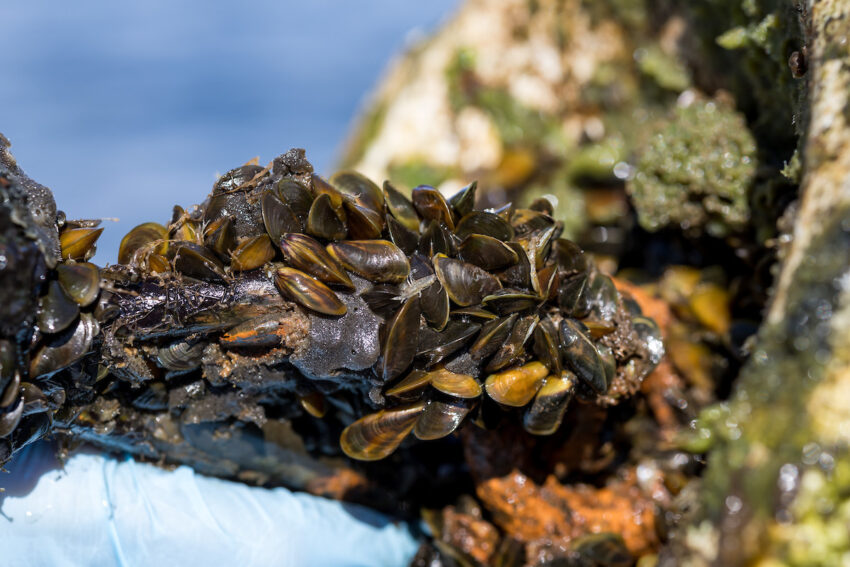
A golden mussel no bigger than a fingernail is working its way across California, clogging the pipes, pumps and canals that move the state’s water. Lake Berryessa is still free of it — and the people who run the lake mean to keep it that way by checking every boat, every time.
That job got harder on April 29, when the state stopped inspecting boats at Lake Oroville and quit sharing Oroville’s boats on the statewide list that clean lakes rely on to trust one another.
Key takeaways
- Golden mussels, first found in North America at the Port of Stockton in October 2024, have spread across California as far south as San Diego County.
- Lake Berryessa remains mussel-free and inspects all of its roughly 30,000 boats a year, coming and going, at a cost of about $1 million a year paid by Solano County — not the state.
- The state stopped boat inspections at Lake Oroville on April 29, citing the lake’s cold water and a $6.5 million annual cost, and no longer reports Oroville’s boats to the shared clean-boat list.
- A boat arriving from Oroville now shows up as a blank at Berryessa, so it can be scrubbed down or held for 30 days even when Oroville itself is clean.
- The Solano County Water Agency warned the state before the cut and says it was never consulted.
A fingernail-sized threat
The golden mussel is only about the size of a fingernail, but it breeds fast and clogs water pipes, pumps and canals. It first turned up near Stockton in 2024 — the first time anyone had found it in North America — and has since spread far across the state, all the way down to San Diego County.
Cleaning the mussels out of a single canal would run several million dollars a year, said Drew Gantner, who manages water resources for the Solano County Water Agency, which owns the Berryessa inspection program. The cost of keeping them out, by comparison, is the price of checking boats.
How the clean-boat system works
Lake Berryessa is still clean, and the agency wants to keep it that way, so it checks every boat, every time. A worker looks the boat over, puts a seal on it and logs it on a statewide list. If a boat just passed a check at another clean lake, its record travels with it and it gets waved through quickly.
That shortcut only works if lakes trust one another’s checks. A boat that just passed at a clean lake can launch at Berryessa right away because its clean history is there to see. Take away the shared record, and the trust goes with it.
What changed at Oroville
On April 29, Lake Oroville stopped checking boats. The state, which runs Oroville, decided the lake’s cold water could keep mussels out on its own. It also said the inspections cost too much — about $6.5 million a year — and that if mussels ever did show up, it could install a $1 million cleaning system to protect the lake’s power plant.
Here is the catch: Oroville no longer adds its boats to the shared list. A boat coming from Oroville shows up at Berryessa as a blank, and Berryessa cannot see where it has been.
What it means for boaters
Say you boat at Oroville, then drive to Berryessa. Your boat gets treated as a risk. It may be scrubbed down, or held for 30 days before it can go in the water. It does not matter that Oroville is clean — Berryessa just cannot prove it.
Checking boats is not cheap. About 30,000 boats use Berryessa each year, and each one is checked coming and going. The program costs close to $1 million a year, and Solano County taxpayers help pay for it. The state does not.
The bigger risk
There is a larger worry, too. Oroville also stopped checking boats on the way in. One bad boat could carry mussels into the lake — and if that happens, every boat leaving Oroville becomes a danger to other lakes.
Others tighten as the state loosens
Elsewhere, agencies are getting stricter, not looser. On June 15, Santa Clara County began tough new boat rules. Lake Sonoma, another clean lake nearby, checks boats every day using mussel-sniffing dogs. And in Washington, two California senators have proposed a new law to help pay for the kind of checks the state just dropped.
The bottom line
Gantner warned the state about all of this before it cut the checks, and he said it again this week. Asked whether the state consulted his agency first, his answer was one word: “No.”
Frequently asked questions
What is the golden mussel and why does it matter?
The golden mussel is an invasive freshwater shellfish about the size of a fingernail. It breeds quickly and clogs the pipes, pumps and canals that carry water for cities and farms. It was first detected in North America at the Port of Stockton in October 2024 and has since spread across California to San Diego County.
Will my boat be quarantined at Lake Berryessa?
It can be. Because Lake Oroville stopped reporting its boats to the statewide clean-boat list on April 29, a boat coming from Oroville shows up at Berryessa with no record. That boat can be decontaminated on the spot or held for 30 days before launching, even if Oroville is mussel-free.
Why did the state stop checking boats at Lake Oroville?
The Department of Water Resources, which runs Oroville, said the lake’s cold water can keep mussels out on its own and that the inspections cost about $6.5 million a year. It said that if mussels ever appear, it could install a $1 million cleaning system to protect the lake’s power plant.
Who pays for the inspections at Lake Berryessa?
Solano County taxpayers, through the Solano County Water Agency, which runs the Berryessa program. The roughly 30,000 boats that use the lake each year are checked coming and going, at a cost of close to $1 million a year. The state does not pay for it.