
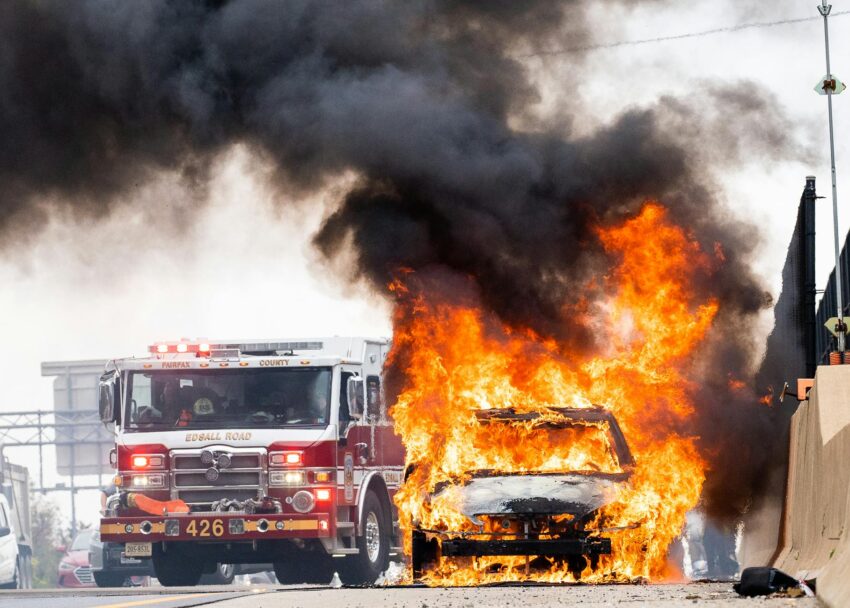
The fire that CAL FIRE’s wine country unit carries into tonight’s red flag warning is one the agency lit itself. The Putah Fire, 869 acres along Highway 128 west of Winters as of early Wednesday, began Monday morning as a CAL FIRE prescribed burn — a fuel break meant to keep roadside fires from climbing into the hills above Lake Berryessa.
Key takeaways
- CAL FIRE’s preliminary investigation says the Putah Fire was caused by the agency’s own prescribed burn, which escaped its control lines Monday as winds picked up, KCRA reported.
- The burn was meant to clear a narrow strip along Highway 128 between Pleasants Valley Road and Lake Berryessa, according to fire analyst Zeke Lunder of The Lookout.
- The fire ran to 300 acres in roughly three hours Monday, per CAL FIRE; it stood at 869 acres and 30% containment early Wednesday.
- It is the Sonoma-Lake-Napa Unit’s incident — the same crews that serve Sonoma, Lake and Napa counties enter tonight’s red flag warning already committed.
A fuel break that became the fire
The burn plan was a long, skinny strip along the highway — the kind of roadside fuel break designed to stop the area’s most common fire starts before they reach the steep country to the north, according to Lunder, a Chico-based fire analyst who runs the wildfire site The Lookout. The stretch of Highway 128 west of Winters has a history of frequent fires, often from roadside ignitions; the project was supposed to take that fuel off the table.
Instead, the wind took the fire. Crews were dispatched about 11:35 a.m. Monday after increasing winds pushed flames past the control lines, CAL FIRE said. The fire moved fast uphill through light, flashy grass — 300 acres in roughly three hours, by the agency’s own count — and burned about 400 acres by sunset. Some 200 firefighters were on it Monday with more en route, KCRA reported. CAL FIRE’s preliminary investigation attributes the fire to the prescribed burn.
Why it got away
Lunder’s read, published Tuesday, is less about one bad decision than about the physics of the place. Midslope control lines are notoriously hard to hold, and the wrinkled Coast Range terrain west of the Sacramento Valley funnels and concentrates wind through the gaps where drainages cut the mountains. The winds Monday were only slightly higher than on previous days, he noted — sometimes a slight increase is all it takes.
He also pointed at the calendar: burn bosses are under pressure to finish projects before fire season closes the window, which can push decisions toward the edge of the envelope. Prescribed fire remains the state’s main tool for cutting fuel loads — and Lunder argues larger, better-resourced burns can actually be safer than small, skinny ones like this.
Why wine country should care tonight
The Putah Fire is a Yolo County incident, but it belongs to the Sonoma-Lake-Napa Unit — the CAL FIRE shop that answers for nearly all of wine country’s wildland ground. Those crews enter tonight with a National Weather Service red flag warning taking effect at 11 p.m. across the North Bay interior mountains and southeast Lake County, ridge gusts forecast past 60 mph, and a PG&E public safety power shutoff beginning in Lake County. The weather service’s warning language for existing fires is blunt: extreme fire behavior and rapid rates of spread are likely.
A separate red flag warning already covers the hills at the fire’s doorstep — the Capay Hills of Yolo County and the Vaca Hills of Solano County — from 11 a.m. Wednesday through 5 p.m. Thursday.
Frequently Asked Questions
What caused the Putah Fire?
CAL FIRE’s preliminary investigation found the fire was caused by the agency’s own prescribed burn along Highway 128, which escaped its control lines Monday when winds picked up. The burn was intended to create a roadside fuel break west of Winters.
How contained is the fire now?
As of early Wednesday, CAL FIRE listed the Putah Fire at 869 acres and 30% contained. Containment progress faces a test overnight, with red flag winds forecast across the region from 11 p.m. Wednesday into Thursday.
Does an escaped burn mean prescribed fire doesn’t work?
Escapes are the exception, and the analyst who reviewed this one says the lesson runs the other way: the terrain and a narrow, midslope burn design made this project hard to hold, and larger, better-resourced burns are often safer and more effective. The fuel break was being built precisely because this stretch of Highway 128 keeps producing roadside fire starts.