

Lake County has no application for a data center, no rules for one, and a ban it has decided not to use yet. Mendocino County, next door, passed its ban in September and stretched it to 2028 without a single applicant.
That’s where things stood at the Middletown Area Town Hall on Oct. 8, in a library meeting room with people standing in the hall.
“At this moment, there’s been nothing brought to the county at all that states data centers,” District 1 Supervisor Helen Owen told the room. Later she put it plainly: “There’s no permit application.” Not even the pre-application a developer files to say what it wants to do.
Owen sits on the county’s energy committee. She said the committee thought about an emergency moratorium and decided to wait. The county can pass one on about 10 days’ notice, she said, but it only lasts two years. Start it now, and a proposal that shows up late in 2027 would find most of the clock gone. “We would burn up a year and a half of it and we’d only have six months.”
So the ban sits ready. “We will still have this tool in our pocket that we can stop it with, that can buy us up to two years to get a permanent in place,” she said. If someone asks, “within 10 days, we can bring that moratorium forward.”
What's on paper
Thomas Lajcik spoke next. “I’m not a county employee,” he said. He’s retired, lives across the lake, and worked for a big IT company where he said about 40% of the contracts involved data centers.
He laid out what’s public.
Red Hills JJI LLC, run by two Southern California entrepreneurs, Jon Vein and Joshua Held, told the Securities and Exchange Commission in September 2025 that it was raising $20 million from private investors. Its latest report, filed Sept. 1, says it has raised $6.99 million from 17 of them. The filing doesn’t say what the money is for.
The Los Angeles Business Journal did, in November 2025. It reported that Vein and Held had bought about 1,000 acres in Lake County and were looking for financing, data center builders and tenants. The electricity would come from XGS Energy, a geothermal company whose system circulates water through closed pipes to reach heat in the rock.
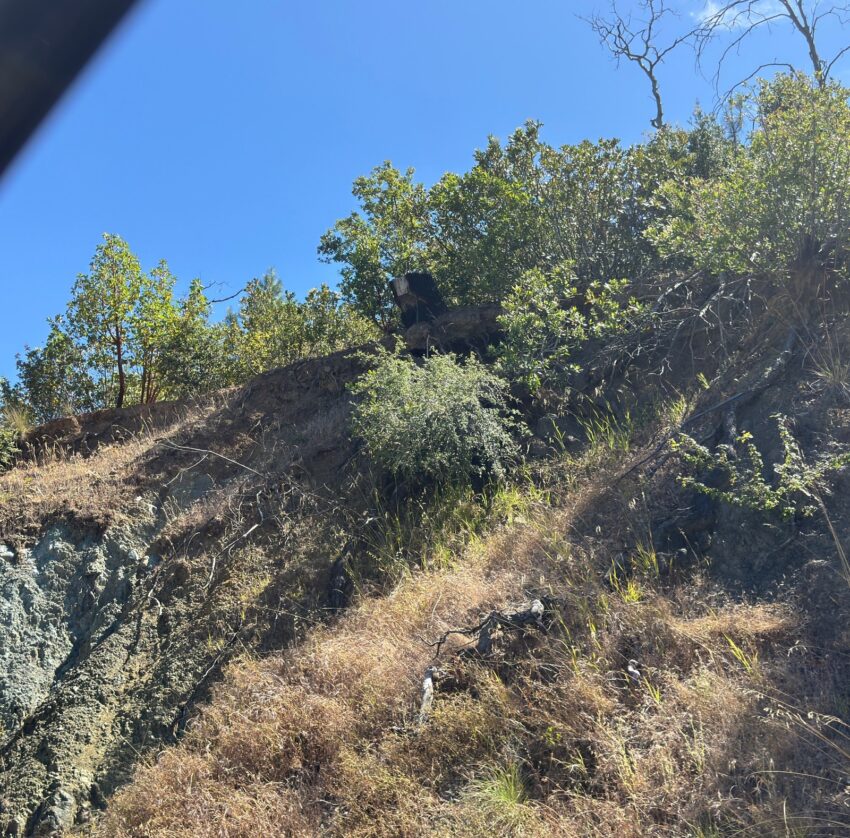
County parcel maps put the land south of Kelseyville along state routes 175 and 29: five parcels, about 642 acres, with the same mailing address the company gave the SEC.
Owen said the Red Hills deal is a lease, not a purchase, and that it covers geothermal only.
Lajcik said Red Hills and XGS are essentially the same people. “They have the same mailing address. They have some of the same officers,” he said.
XGS told the California Energy Commission in May that it has found usable geothermal heat in Lake and Sonoma counties outside the Geysers, the geothermal power field on the Sonoma-Lake county line. In July it told the commission it’s lining up California projects to serve, among other customers, data centers.
A state law signed last October, Assembly Bill 531, lets a geothermal power plant of any size get its approval from the Energy Commission instead of the county. XGS pointed the commission to that law in July.
Owen said a data center can’t take that route. “They can’t with the data center,” she said. “They’re going to have to come to the county.”
Lake County uses about 44 megawatts of electricity, Lajcik said. A 200-megawatt data center, which he called a modest one, would use four times that. “That one data center is about four times our current electrical load,” he said.
He said he doesn’t report to anybody. His advice: “we should err on the side of caution.”
Who has talked to the county
The energy committee’s presentation that night listed what the county knows about. One project has filed an application, a wind farm in Morgan Valley. Three geothermal companies have talked to staff, Red Hills among them, and two hydrogen companies have asked about exploring. “There’s three geothermal projects that have showed interest that have kind of talked, but there’s been no paperwork filed at this moment,” the committee told the room.
The county has no energy chapter in its general plan. The committee recommended writing one in June. The draft energy strategy that went to supervisors Oct. 6 doesn’t mention data centers. Nothing on data centers has come to the board since.
The East Region Town Hall, another of the county’s advisory councils, voted the night before to ask the board to pause permits for energy projects and data centers in its area until the county writes an energy plan, its chair, Angela Amaral, told the meeting. Owen said she hadn’t read the letter yet.
What Mendocino did
Mendocino County’s supervisors didn’t wait. They passed an urgency ban on new data centers Sept. 1 and on Oct. 6 extended it to Aug. 21, 2028, as long as state law allows, on a 4-1 vote. The ordinance names no applicant. It says the county expects inquiries and applications and wants to work out its standards first.
The extension has one exception. Anything that uses less than 3 megawatts is allowed. Supervisor Ted Williams said 3 megawatts would allow “a data center the size of a shipping container.” Supervisor Maureen Mulheren voted no, calling the threshold “not fully developed.”
Get the Gazette by email
The day’s stories from Sonoma, Napa, Lake and Mendocino counties, picked by the editor. Free.