


Opinion
I’m 65, and I receive $1,269 a month in Social Security and SSI. Using the common 30% housing-cost benchmark, that leaves $380.70 a month for housing, including utilities. That figure is a yardstick, not a rent rule for every subsidized apartment. But it shows the scale of the problem: a $788 room would take about 62% of my income and leave $481 for everything else.
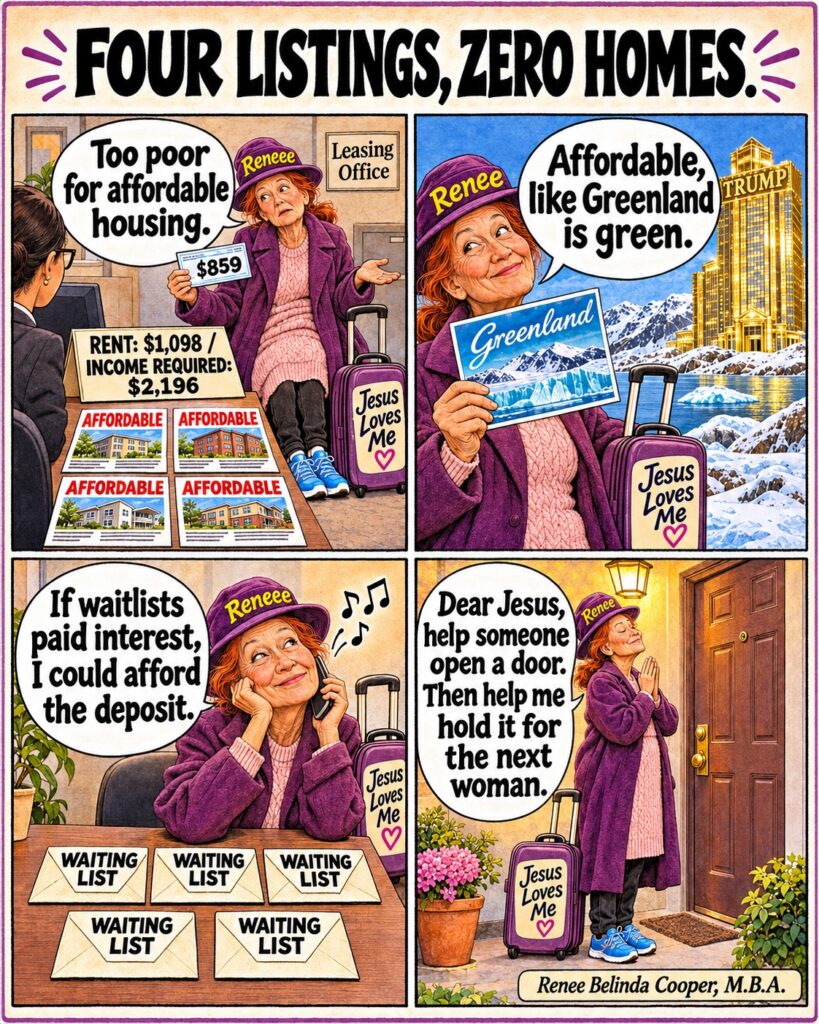
I have looked at four senior-housing options: Hawthorn Senior Apartments, Laurel I & II at Perennial Park, Silvercrest Senior Living Residence, and Casa Grande. A listing can look like an opening. It does not tell me whether I can meet the income requirement, whether a waitlist is moving, or whether the rent fits a fixed monthly check.
One answer is documented. Burbank Housing’s September 25 notice removed me from Laurel I & II because my annual income was below its stated $27,744 minimum. My reported Social Security and SSI total $15,228 a year—a gap of $12,516. Burbank upheld the decision on October 6 and referred me to the City of Santa Rosa’s Project-Based Voucher waiting list. That referral may be a route to explore; it is not a home or a move-in date.
At Silvercrest, I was told by phone that I needed about twice my current income. I have not received written confirmation of that requirement. The status and terms for the other options also need to be checked. I’m not claiming that four providers made four identical decisions. I’m describing what a person can see from the applicant’s side: four listings, and no confirmed home I can afford.
The statewide picture is larger than my search. A California Department of Aging analysis found that about half of renter households with an older adult or a person with a disability spend more than 30% of income on housing. Among extremely low-income households in those groups, about 80% do. The report combines older-adult and disability households; it does not say those percentages apply to seniors alone.
I understand economics and marketing. Money is a tool; it does not choose where to flow. People and the systems they build direct it. A housing market can produce apartments, waiting lists, flyers, and referrals while still leaving the lowest-income seniors without a door they can open. A spreadsheet may count four opportunities. My life still needs one home.
I am in transitional housing now, but a temporary room is not permanent retirement security. I want housing whose real cost fits a fixed income, and a clear path from an application to an actual unit. If a program is called affordable, applicants should be able to see the rent, utility assumptions, income rules, subsidy, and next step in plain language.
Dear Jesus, help someone open a door. Then help me hold it for the next woman. She’s probably already got the referrals, too.
Sources: California Department of Aging, California Statewide Non-Medi-Cal Home and Community-Based Services Gap Analysis Report (housing-cost burden findings); California Department of Housing and Community Development, “Overpaying” (cost burden generally means spending more than 30% of income on housing, including utilities). Personal application and income details are Renee’s account; the September 25 Burbank notice documents the stated minimum-income reason. The Silvercrest statement is reported from a phone conversation and has not been confirmed in writing.
Renee Belinda Cooper, M.B.A.
Santa Rosa
Get the Gazette by email
The day’s stories from Sonoma, Napa, Lake and Mendocino counties, picked by the editor. Free.