

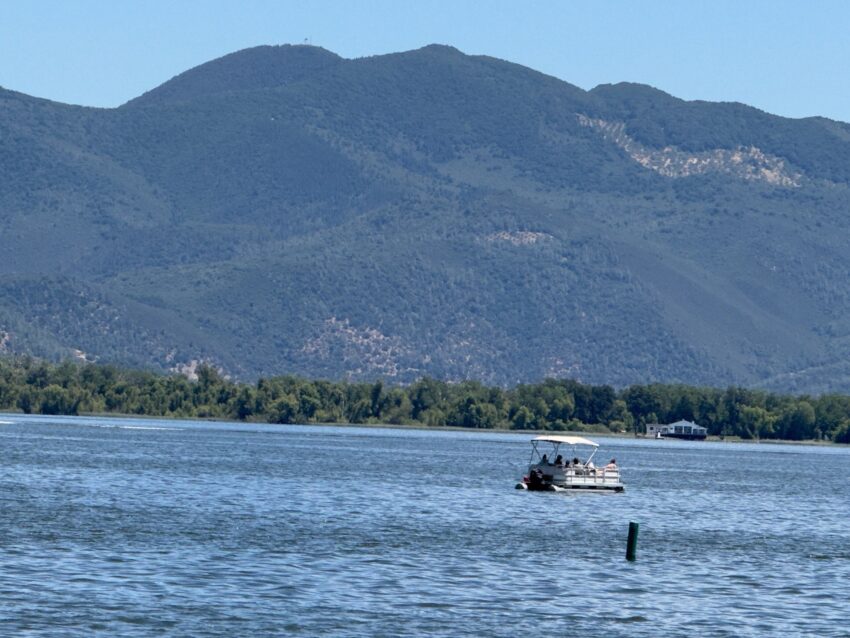
Boaters who launch on Clear Lake would pay $30 for the county’s mussel sticker in July 2027, and $60 by 2033, under a plan Lake County supervisors take up Tuesday.
The sticker now costs $20 for a set of three per boat, according to the county’s screening page. The Water Resources Department proposal raises it by $10 every two years: $30 on July 1, 2027, then $40 in 2029, $50 in 2031 and $60 on July 1, 2033. Boat decontamination would stay free.
The board, sitting as directors of the Lake County Watershed Protection District, hears the item at 10:30 a.m. at 255 N. Forbes St. in Lakeport, and on Zoom.
Why the county wants more
The sticker money goes to the county’s mussel prevention program, which posts ramp monitors to check boats for quagga, zebra and golden mussels before they go in the water. The program has leaned on state and federal grants, and when those fell short, the county covered the deficit with its own money, according to the staff memo from Water Resources Director Pawan Upadhyay and invasive species coordinator Thomas Fardig.
In September, staff put the program’s cost for 2027-28 at $858,611: $481,626 for ramp monitors, $235,058 for staff time and $141,927 for operating costs, according to the Sept. 1 presentation. The county clears about $167,000 a year from stickers now, which leaves a gap of $691,385.
In 2025, the state turned down the county’s $399,520 request for mussel prevention. The county said in a July 2025 memo that the application was rejected over what it called a clerical oversight: it left out a letter documenting the state Department of Fish and Wildlife’s review of the county’s mussel prevention plan. The county appealed. In August, staff asked the board to accept a $399,520 state grant for 2026-27.
The county’s presentation says golden mussels were first found in California on Oct. 17, 2024. The closest detection to Clear Lake is at the Port of West Sacramento, about two hours away.
What the higher fee would bring in
The county sold 13,322 stickers in 2025-26. Staff based its projections on the five-year average of 12,276 a year.
Most stickers are sold by outside vendors, which keep $7 of each $20 sale. Under the plan, the vendor share would rise to $9 at $30 and $15 at $60. The county would net $21 per vendor sticker at $30 and $45 at $60.
Staff projects county sticker receipts of $267,606 a year at $30 and $568,770 at $60. Even the full $60 would leave sticker money about $290,000 short of the $858,611 staff estimated for 2027-28. The memo asks the board to direct staff to find “a dedicated, sustainable funding source” to cover shortfalls when fees and grants fall short.
A second try after September
On Sept. 1, staff asked the board to raise the sticker from $20 to $60 in one step. Staff’s model showed $80 would cover the full cost with no grants. In staff’s summary in the new presentation, supervisors agreed the fee should go up but were “unsure of reasonable price,” and asked for more review and public feedback.
Staff’s summary of public feedback lists “boater frustration with the increased fee.” Vendors generally support the increase if their pay rises with it. Tournament directors “are not in favor of any increases.”
A new permit for fishing tournaments
Tournaments now need only an $82 permit from the California Department of Fish and Wildlife, according to the September presentation. Staff said one tournament on June 27-28 cost the county $7,000 in fees for mussel-sniffing dogs, and that Water Resources had spent more than $90,000 on the dogs “this fiscal year.”
The county’s proposed special event lake access permit comes in two versions. Option A charges $50 per event, plus $900 per day for each launch ramp at events with more than 100 participants, to pay for the dogs. Events held without a permit could be fined $2,500. Option B charges $100 per event and drops the dog fee.
The memo recommends approving the $900 dog fee, but a slide in the same presentation lists “remove the mussel dog fees previously proposed” as staff’s response to the feedback.