

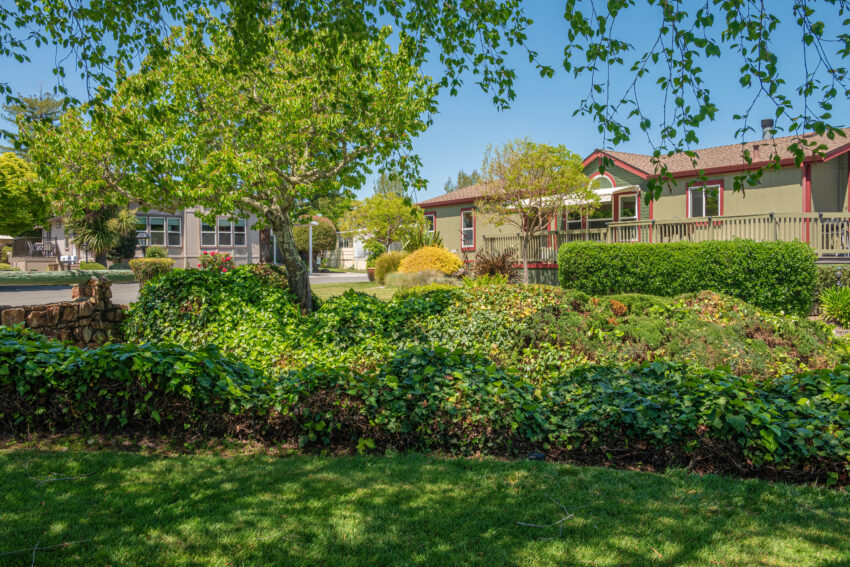
All three of Sonoma’s mobile home parks landed in the same council district when the city drew its new election map — and that district doesn’t vote until 2028.
Moon Valley and Pueblo Serena, neighbors on Fifth Street West, and Sonoma Oaks on Sonoma Highway all sit inside new District 4, a Gazette review of the city’s adopted district map confirms. Together the three parks hold more than 450 homes the city counts as affordable housing.
Sonoma is switching from citywide council elections to district ones. The council started the move in December 2024 — voluntarily, to head off the kind of California Voting Rights Act lawsuits that have hit other cities — and picked the final five-district map on April 2, 2025, drawn to near-equal population on 2020 census numbers. Districts 1, 3 and 5 vote first, this November; candidates can pull nomination papers starting Monday. Districts 2 and 4 wait until November 2028.
That sequencing is the rub. The city is rewriting the rules that decide what happens if a mobile home park ever closes or converts to another use — and the district that holds every park in town won’t have its own elected council member until the rewrite is long finished.
The rewrite on the table
The closures-and-conversions chapter of the municipal code dates to 2004. Two newer state laws — Assembly Bill 2782, from 2020, and Senate Bill 610, passed last year — expand what park owners owe displaced residents, and cities have to update their ordinances to match. Among the changes: residents must get the required relocation impact report at least 60 days before a hearing, up from 15 under Sonoma’s current code, and every displaced home must be appraised at in-place market value by a state-certified appraiser.
No park in Sonoma has ever closed, city staff notes in its reports, and space rents at all three parks have been capped to the Consumer Price Index since 1992 — rent control the city adopted “to assure that economic hardship to a substantial number of mobilehome park tenants in the City, many of whom are senior citizens on low fixed incomes, does not occur,” as the ordinance puts it. The rewrite decides how much protection residents get if a closure ever comes.
The council held study sessions on the update Nov. 5 and Dec. 3, then took up a draft ordinance April 15 and gave staff direction on where to land it.
Park residents aren’t waiting to be asked. The Tri-Park Committee, a residents’ group spanning all three parks, submitted its own model ordinance, and city staff’s report walks through its asks point by point: make the park owner pay for a housing specialist to help residents relocate; pay relocation money at least 90 days before anyone has to vacate; count “comparable” parks only within 20 miles, or in Sonoma and Napa counties with similar environmental scores; appraise the park itself, not just the individual homes; give residents equal time at the public hearing; and make mitigation conditions mandatory rather than optional. Six speakers addressed the first study session in November. By April 15, there were 12.
Four votes, no district seat
When the draft ordinance came up that night, Vice Mayor Sandra Lowe recused herself and left the meeting at 6:50 p.m. because she lives within 500 feet of one of the parks, the certified minutes show. State conflict-of-interest rules treat nearby real property as a disqualifying interest, so park questions now get decided by the other four members: Mayor Ron Wellander and council members Patricia Farrar-Rivas, John Gurney and Jack Ding.
The city’s district-elections page is direct about what the new map doesn’t change: services, programs and residents’ ability to contact any council member. Every member still represents the whole city, and staff committed in its reports to keep working with residents and park owners before any public hearing on the ordinance.
Still, the arithmetic is what it is. The council took up districts to bring representation closer to home. For the 450-plus households at Moon Valley, Pueblo Serena and Sonoma Oaks, home won’t get a ballot line until 2028 — and until then, the parks’ loudest voice at city hall is the one they’ve always had: the two-minute turn at the public-comment microphone.