

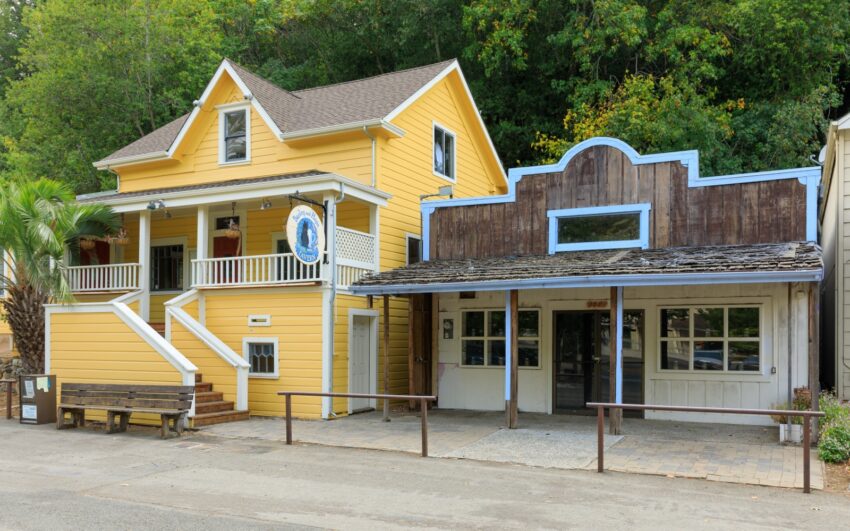
OCCIDENTAL, CA., 11/7/26 — Occidental’s sewage leaves town in a truck. The town’s sanitation district hauls it from a pump station in Occidental to a treatment plant in north Santa Rosa.
A 5.5-mile pipe to Graton is supposed to take over that job. Sonoma Water’s project page says the pipe is meant “to reduce costs.” Three Sonoma Water documents give three different years for building it.
Slides from an Oct. 15 project update put construction from January 2031 to December 2032. The agency’s project page, read Nov. 7, says January 2030 to December 2031. The final West County sewer report, dated Oct. 28, lists pipeline construction starting in 2029 and taking two years.
The slides and the project page call their dates estimates. The report calls its schedule possible. The slides end with a “Questions?” page and the name of Carlos Diaz, Sonoma Water’s deputy director of engineering.
What the wait costs
A single-family home in the Occidental County Sanitation District pays $3,294 a year for sewer service, or $274.50 a month. That’s up 4.7% from $3,146. The Sonoma County Board of Supervisors, which is also the district’s board, approved the rate 5-0 on May 12.
Sonoma Water runs eight sewer districts and zones. Occidental’s rate is the highest. Next is the Russian River County Sanitation District at $2,696. The lowest is South Park at $1,274.
Sewer charges bring in “approximately 32% of the total revenue needed to provide service,” Jake Spaulding, Sonoma Water’s financial services division manager, wrote in a March memo. The memo projects $1,318,000 from the agency’s general fund this year. The memo shows another 4.7% increase next July, to roughly $3,449.
In a town like Occidental, “with only around 100 ratepayers,” the final report says, “residents pay among the highest sewer rates in the state, despite partial subsidies from Sonoma Water.”
Why Occidental trucks its sewage
In 2012 the Regional Water Quality Control Board ordered the district to stop putting treated wastewater into Dutch Bill Creek and Graham’s Pond from May 15 to Sept. 30. “Trucking was identified as the lowest cost and only viable interim solution to achieve compliance,” the Oct. 15 slides say.
The pipe would run from Occidental’s pump station to Graton’s. In dry weather, all of Occidental’s sewage would go to the Graton plant. In wet weather, it would go there when the plant has room. When it doesn’t, Occidental would pump the extra to its own storage ponds. “Trucking only to occur if storage full,” the slides say.
The pipe needs outside money
A 2022 study found it made sense only “if 50 percent of the capital costs are funded through grants, low-interest loans or other non-ratepayer sources,” according to the project page. “If funding is not available, the study recommended that wastewater be trucked to Graton for treatment.”
The slides say: “Pipeline alternative had lowest O&M cost, but trucking had lowest present worth.” O&M is operating and maintenance, the cost of running the system day to day. Present worth adds up all the costs over the years, building included, in today’s dollars. The pipe is cheaper to run. Trucking is cheaper overall, unless grants or other outside money pay for at least half of building the pipe.
In May 2025 the district got a $1.45 million U.S. Environmental Protection Agency grant to design the pipe. The design is set to reach 60% in November, the slides say, with the 90% design and environmental review due in April 2027.
Money to build it is supposed to come from the State Revolving Fund, a state program that lends money for water and sewer projects. First comes a median household income survey, set for early 2027. It’s “needed to qualify for loan forgiveness,” the slides say. The state application follows in September 2027 “if favorable MHI.” MHI is short for median household income. A construction grant award is expected in December 2028.
A merger and a new plant later
The Oct. 28 report’s preferred option treats West County sewage at two hubs, one in Guerneville and one in the Forestville and Graton area. Forestville’s, Graton’s and Occidental’s share of the plan’s projected cost is $75 million.
The report lists an agreement to merge the Occidental and Graton districts in 2031. Work on a combined treatment plant is listed to start in 2032 and take five years.
Requests for relief
Comments on the draft report asked Sonoma Water for relief. “The timeline for meaningful relief appears to be many years, possibly even decades,” Matthew Meblin wrote in a comment on the draft report. “Some businesses may not survive long enough to benefit from the eventual improvements.”
A respondent to the report’s community survey wrote: “High sewer rates are absolutely killing Occidental.”
Sonoma Water gave each request for relief the same answer in the final report: “Emergency relief for current Occidental ratepayers was outside of the scope of the PAR and Feasibility Study.” PAR is the Project Advancement Report.
On the Oct. 15 slides, the income survey comes first. Construction comes last, in 2031.
Get the Gazette by email
The day’s stories from Sonoma, Napa, Lake and Mendocino counties, picked by the editor. Free.